
The most disappointing 250th - and why media literacy might be a key part of damage control in the next 50 years

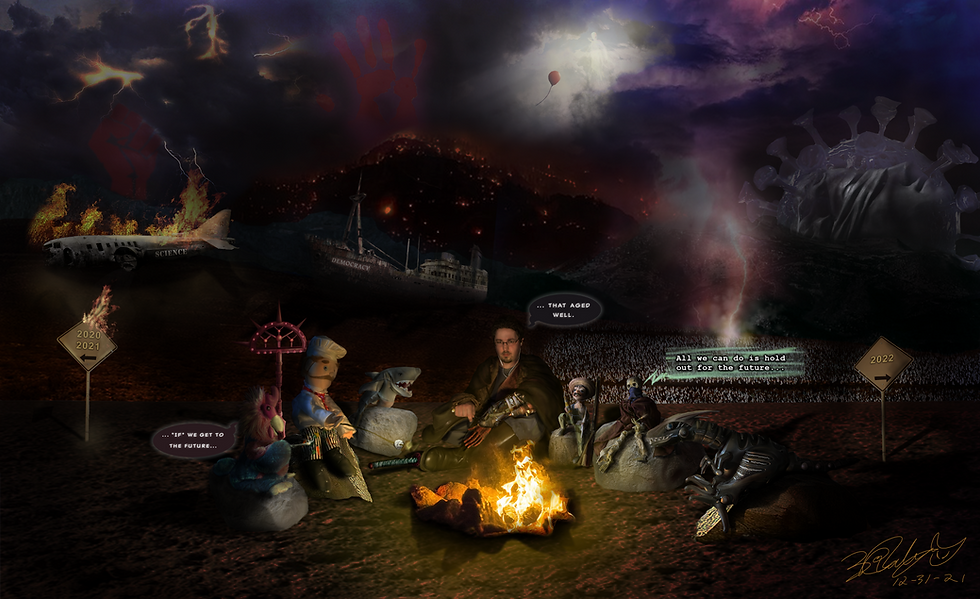
I really don't feel any jubilee mood for America's 250th, because how?? Assuming we somehow get out of this insanity without completely collapsing the entire country, we have a long list of damage control to get out of where we are now - a dangerous combination of Opus Dei-type theocracy, Neo Nazi fascism, and Cold War East Germany authoritarianism all at the same goddamn time. I don't see a celebratory atmosphere with the following (as a start): -ICE, who are now the American Stasi*, has kidnapped another 10,000 people in a span of five days (the total in-custody numbers are now over 63,000), with a total of dozens dead in ICE custody - and executing other citizens in broad daylight, such as Rene Good (killed by ICE agent Jonathan Ross) and Alex Pretti (killed by Border Patrol Agent Jesus Ochoa and CBP officer Raymundo Gutierrez.) No I will not retract this under any circumstances. [*The Stasi were the secret police of East Germany, when the Iron Curtain still existed. ICE is the Stasi's American clone, for all intents and purposes.] -The MAGA Justice Department has outright refused to acknowledge any authority of the International Criminal Court, and have more or less threatened any nation with military force who dares question America's extremism. -Even the goddamn Supreme Court is compromised beyond belief - seven of those justices need to be relieved from the bench and relieved of their law licenses for blatant failure in apolitical adjudication, and at least five S.C. justices need to go to prison for combinations of bribery, corruption, and in Kavanaugh's case, multiple counts of sexual harassment and assault.
-and as of finishing this mini-essay on July 4th, I just saw news headlines of the Patriot Front (white nationalist terrorists) openly marching on D.C. as the traitor-in-chief claims "Republicans will not loose an election for the next 100 years". You couldn't make up this ridiculous sh*t up if you tried.
The British Empire would have literally fainted if they could see how powerful social media is in the hands of a tyrant. The East India Company never had the 24-hour news cycle or any social media - nor the level of manufactured panic of both combined. The level of control over the masses with those two things is something the people of the 1700s could never have dreamed of. Bible-thumpers of the 1700s, trying to exploit and control poorly-informed, highly-susceptible idiots, were limited to in-person hate sermons and hand-written messages that took months or more likely years to disseminate. But today's red-pilled extremist-political-aligned Bible-thumper-podcasters can spread their delusional hate to millions of poorly-informed, highly-susceptible idiots - and they can do it in minutes, not months or years. Same goals, but exponentially more damage - and thousands of times faster than the people of the 1770s could even have comprehended. ******
A long story made short, any sort of jubilee would be highly misguided for America's 250th. My feelings around this July 4th are not pride - they are genuine worry that assuming I live to at least 80, I will be spending the next 50 years of my life dealing with this, the damage control to follow, and whatever next political crisis is down the road. And I'm worried about my friends and coworkers and if they're going to make it through the year without being abducted by the American Stasi, or worse.
But instead of just ranting endlessly, this mini-essay needs to end with something more constructive - what CAN we do in the next 50 years for damage control? What useful things can be done to put America back on a better track? I've spent half this post ranting about the damage of social media, so there's an idea - information literacy and media literacy. WE NEED to start teaching information literacy at the earliest age possible. High school, middle school, even elementary-age students can be taught how to find information about a topic and then determine if that information is true or not. This sort of education is already in place in K-12 schools throughout Germany, Denmark, Japan, and the other true democratic/capitalist* nation-states that already have this figured out. [*quick tangent - Japan, Germany, Denmark, those are examples of true capitalist countries. "Evil capitalism of America" is another misguided myth that can be thrown out the window - we don't have capitalism in America, we haven't had it since the 1950s. What we have is corporatism, where corporations dictate all economic terms - that closed system is the exact opposite of an open competitive system that Germany, Denmark, Japan, and Switzerland use (just a few examples.) More imporantly, capitalism as an economic system is supposed to operate serperately from the law and government. Corporatism purposefully makes no distinction between economic and political control - and that is dangerous.]
While a fully qualified teacher would be better at the full lesson plans than I on this, I see media literacy education in grade schools being broken down into four basic lessons, adjusted for age/grade level as needed: 1) When learning about something, what sources are you using?
2) Can you trust those sources? Who is behind those sources? Are those people providing facts, like an almanac or a vetted historical society, or are just they giving opinion? What are the differences between opinion pieces (also known as 'op-eds') and statements of actual fact? (op-eds are not always factually wrong, but they're not always factually correct either. This is particularly important in this lesson.) 3) Can you verify your source's integrity with another source on the same subject? If you consult other sources on the same topic, do they have the same information as your first source(s)? Any differences between the sources? 4) If you find there's wrong information in a source, why is it wrong? Is it simply outdated information, something innacurate published by mistake, or is someone intentionally trying to mislead you? Why would this be the case? Obviously, you would have to use the crawl-walk-run approach through the ages/grades, starting simple with elementary-age questions (how can you find out who published this information?), then gradually move into more advaced questions for middle-schoolers (do other sources agree, and which sources have holes in their information?), and finally reach a point where you can teach middle-to-high-school students to actively verify or disprove a source and be able to enunciate why or why not a source is reliable. This sort of education also needs to make the disctinction between deliberate lies and mistakes - people make mistakes all the time, it happens - even with experts. But there are still many others who deliberately falsify information, or believe false information themselves so much that they've made themsleves incapable of understanding the bigger picture (bias training would also be a key compoment in those courses.) It would be absolutely critical to know the difference between true, accidentally false, deliberately false or biased, or somewhere in the middle (and this is where fully qualified teachers can shine in these lessons.) I used to work as an after-school tutor for elementary/middle school students while I was in my early college days. Even though most of the work I helped with was English and math and other basic subjects, I still encouraged as many kids as I could that, when they learn about something new (especially something that sounds too good to be true), what can you do to confirm or disprove that something? How do you make sure you're getting correct info when the world is a complicated mix of both true and false data? It's a lesson of responsibility for the individual to sort through true facts, opinions, and statements that are just wrong. Learning things should be more than just absorbing any information you encounter, but being able to examine that information and decide yourself if it's trustworthy, or if whoever's publishing that info has other goals that don't coincide with the truth. And why stop there with K-12? Make media literacy a required course for all universities - American adults are in dire need of this sort of training - get info, verify it, and determine if it's true or false and why it's so (or if it's somewhere in the middle, and what are the specifics of that? This can be tricky but not impossible to learn these middle-ground scenarios.) Media literacy is something we HAVE to get back into every school, every university, every city, every state in the nation. We cannot be the most powerful nation in the world without the basic thinking power to keep misinformation and disinformation at bay.
Ignorance is not strength, ignorance is foolishness. Wisdom is true strength, to be able to teach yourself how to teach yourself while not falling for biases, misleading info, or deliberate lies. We're well into the 21st century, it's time to get the 21st-century awareness about the tsunamis of information we're in and how to best manage it. If we don't want more of the worst people taking all political and economic power away from us, we're gonna have to learn some basic media literacy to give us a chance of making better-informed decisions. There's a long list of things to do in the next 50 years in the United States for damage control, but media literacy may be one of our best tools to not keep slipping back into Dark Ages-type ignorance.
We're well into the 21st century, let's bloody act like it.
P.S. Mind your fireworks - birds, bees, many wild animals become disoriented in the explosions and even abandon their hives/dens in a panic. And respect your neighbors who are veterans, too - and their pets. And as always, drink responsibly.

Comments